Не божеволійте на роботі, або як створити спокійну компанію — Джейсон Фрайд, Дэвид Хайнемайер Хенссон
It Doesn’t Have to Be Crazy at Work — by Jason Fried and David Heinemeier Hansson
8/10
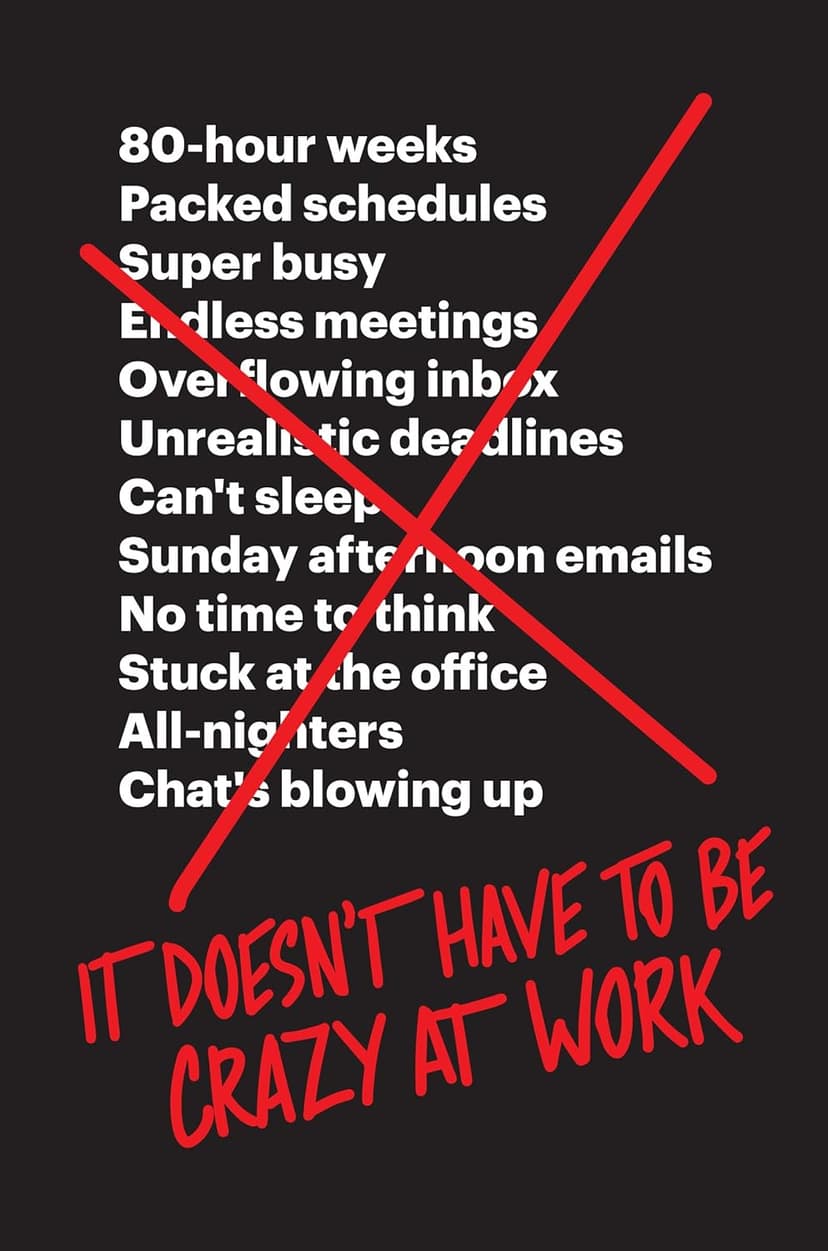
Щоб покращувати продукт, його потрібно регулярно переглядати та оновлювати. Те ж саме стосується і компанії. Проте багато компаній не змінюють своїх підходів до роботи — вони один раз обирають спосіб і дотримуються його. Ранні звички стають постійними, політики застиглими, і компанії залишаються заручниками власної неефективної і навіть шкідливої рутини.
Це свіжий погляд на організацію роботи, яка не вимагає постійного стресу, перевантажень і безкінечної метушні. Засновники компанії Basecamp, пропонують альтернативний підхід до бізнесу, де цінується не лише результат, але й спосіб його досягнення.
Мої нотатки
There are two primary reasons: (1) The workday is being sliced into tiny, fleeting work moments by an onslaught of physical and virtual distractions. And (2) an unhealthy obsession with growth at any cost sets towering, unrealistic expectations that stress people out.
The modern workplace is sick. Chaos should not be the natural state at work. Anxiety isn’t a prerequisite for progress. Sitting in meetings all day isn’t required for success.
They might change what they make, but how they make it stays the same. They choose a way to work once and stick with it. Whatever workplace fad is hot when they get started becomes ingrained and permanent.
A company is like software. It has to be usable, it has to be useful. And it probably also has bugs, places where the company crashes because of bad organizational design or cultural oversights.
Mark Twain nailed it: “Comparison is the death of joy.” We’re with Mark.
The wisdom of setting business goals—always striving for bigger and better— is so established that it seems like the only thing left to debate is whether the goals are ambitious enough.
The future is a major abstraction, riddled with a million vibrating variables you can’t control. The best information you’ll ever have about a decision is at the moment of execution. We wait for those moments to make a call.
We don’t believe in busyness at Basecamp. We believe in effectiveness. How little can we do? How much can we cut out? Instead of adding to-dos, we add to-don’ts.
Being productive is about occupying your time—filling your schedule to the brim and getting as much done as you can. Being effective is about finding more of your time unoccupied and open for other things besides work. Time for leisure, time for family and friends. Or time for doing absolutely nothing.
What’s worse is when management holds up certain people as having a great “work ethic” because they’re always around, always available, always working. That’s a terrible example of a work ethic and a great example of someone who’s overworked.
A great work ethic isn’t about working whenever you’re called upon. It’s about doing what you say you’re going to do, putting in a fair day’s work, respecting the work, respecting the customer, respecting coworkers, not wasting time, not creating unnecessary work for other people, and not being a bottleneck. Work ethic is about being a fundamentally good person that others can count on and enjoy working with.
You can’t plan your own day if everyone else is using it up randomly.
When someone takes your time, it doesn’t cost them anything, but it costs you everything.
If you don’t own the vast majority of your own time, it’s impossible to be calm. You’ll always be stressed out, feeling robbed of the ability to actually do your job.
The common thinking goes like this: If I can write you quickly, you can get back to me quickly, right? Technically, right. Practically, wrong.
Most importantly, however, when you make it up as you go, you get to do what you think, not what you thought. All plans are rooted in the past — they're never what you think right now, they're what you thought back then. And at best, they're merely guesses about the future. I know a whole lot more about today, today than I did three months ago. Why not take advantage of that reality? I don't want to be locked into my previous mind.
If you’re talking about something new or novel, you’ll have to repeat yourself for years before you’re heard.
Whoever managed to rebrand the typical open-plan office—with all its noise, lack of privacy, and resulting interruptions—as something hip and modern deserves a damn medal from the Committee of Irritating Distractions. Such offices are great at one thing: packing in as many people as possible at the expense of the individual.
Following group chat at work is like being in an all-day meeting with random participants and no agenda. It’s completely exhausting.
Most deadlines aren’t so much deadlines as dreadlines. Unrealistic dates mired by ever-expanding project requirements. More work piles on but the timeline remains the same. That’s not work, that’s hell.
Culture is what culture does. Culture isn’t what you intend it to be. It’s not what you hope or aspire for it to be. It’s what you do. So do better.
Time-management hacks, life hacks, sleep hacks, work hacks. These all reflect an obsession with trying to squeeze more time out of the day, but rearranging your daily patterns to find more time for work isn’t the problem. Too much shit to do is the problem.
The only way to get more done is to have less to do.
The smart bet is one where you get to play again if it doesn’t come up your way.
The worst customer is the one you can’t afford to lose.
If you want to know the truth about what you’ve built, you have to ship it. You can test, you can brainstorm, you can argue, you can survey, but only shipping will tell you whether you’re going to sink or swim.
Real answers are only uncovered when someone’s motivated enough to buy your product and use it in their own natural environment—and of their own volition. Anything else is a simulation, and simulated situations give you simulated answers. Shipping real products gives you real answers.